Commercial Mediation · Toronto
Retained year after year by Canada's leading litigation practices for their most consequential disputes. Built on trust, earned case by case. Rigorous preparation and a unique process designed to move parties from positions that appear irreconcilable to settlement.
"Kathryn is a popular choice amongst wise counsel for a lot of cases — why? Because she is fair. Because she puts the work in to understand the case and hear the parties out. Because she has put in the time as a generalist civil litigator, with expertise in various practice areas and a strong familiarity with not only substantive law, civil procedure, and rules of evidence, but also with the practical aspects of a dispute, such as the financial cost, the impact on business reputation, and the toll on the litigants."Founding Partner, Litigation Boutique
Kathryn Podrebarac's practice has been built entirely through referral. Counsel at Canada's top national law firms and leading litigation boutiques have used her, returned, and placed her on their firms' recommended mediator lists. She is retained for disputes where the stakes are too high to leave to chance.
Called to the Ontario bar in 1994, Kathryn began her career on Bay Street at a top national firm before founding two leading litigation boutiques, both of which were consistently recognized by Lexpert as "repeatedly recommended" for corporate commercial litigation in Toronto. In 2016, four of her cases were resolved in her clients' favour at the Supreme Court of Canada.
In April 2017 she established her mediation practice, bringing invaluable litigation experience to the mediator's role: she knows precisely where the parties' risks lie because she has lived through those risks at the bar.
Kathryn was inducted into the Canadian Academy of Distinguished Neutrals in 2022 and continues to speak and teach on mediation and negotiation at national conferences and continuing legal education programs. Her presentation at the ADR Institute of Canada's 2025 National Conference, "Why 'Good Cases' Fail to Settle," reflects the thinking that is central to her practice.
In 2026, Kathryn was awarded the Ontario Bar Association's Award of Excellence in Alternative Dispute Resolution in recognition of her outstanding contribution to the field.
Kathryn mediated a very difficult case for me recently. The parties were extremely far apart and the underlying issues were infused with emotional undertones that made resolution extremely difficult. Kathryn did a masterful job. Her methodical approach to resolution — taking factual issues off the table at the outset, focussing on the interests of the parties and providing clear and transparent guidance on resolution strategies and risk — brought the parties together. We would not have resolved this case without her hard work and assistance.
Senior Litigation Partner, National FirmWhat distinguishes Kathryn's practice is not experience alone. It is a methodology designed to establish the conditions for productive negotiation and create the best opportunity for the case to settle. Each of the four elements below emerged from her litigation experience, her training, and nine years of close attention to what works.
Pre-Mediation
Kathryn treats the pre-mediation planning meeting as the beginning of the mediation itself, not a scheduling call. She convenes all counsel with a single purpose: to ensure that by the time the parties sit down together, every foreseeable barrier to settlement has already been addressed.
That means confirming that the right decision makers will be present and that full settlement authority will be in place. It means ensuring each party has the information they need to properly value the case before the day arrives. It means addressing damages head-on: Kathryn may require a damages outline from the plaintiff in advance of mediation briefs, giving the defence adequate time to respond and obtain instructions. And it means setting a delivery schedule for mediation briefs, typically no later than 10 days before the session, that gives all parties and their counsel genuine time to review, reflect, and prepare.
The goal: to arrive on the day with the conditions for resolution already in place.
Decision Analysis
Kathryn offers litigation decision tree analysis as a standard, included element of every mediation, at no additional charge. No other commercial mediator in Canada is known to offer this as a routine part of their practice.
At the planning meeting she presents a 45-minute overview of decision analysis methodology, walking counsel through a detailed case study from both plaintiff and defendant perspectives. She then meets confidentially with each side. Based on each party's confidential risk assessments, she builds a decision tree using software: a rigorous probabilistic model mapping every material outcome at trial and the probability of each occurring.

The output is a confidential report showing the risk-adjusted settlement value of the case from that party's perspective — giving each party a clear, evidence-based picture of what continued litigation actually means for them.
Opening Session
Every mediation opens with a detailed PowerPoint presentation that Kathryn prepares specifically for the case and presents to all parties and their counsel. It takes approximately 45 minutes.
The presentation serves three purposes. First, it demonstrates that Kathryn has carefully reviewed the mediation briefs and thought deeply about the case, giving the parties and their counsel confidence that they can focus the mediation on productive negotiation rather than educating the mediator. Second, it confirms that each party has been heard: their positions, their concerns, and their view of the facts have been considered and are reflected in the presentation. Third, it ensures all parties enter the negotiation with a common understanding of what is agreed and what is disputed — a foundation for everything that follows.
It covers four elements: Ground rules and interests — including a structured examination of what litigation will truly cost each party in time, legal fees, cost exposure in a loser-pays jurisdiction, and intangibles including reputation, precedent, and stress. Key legal issues — the questions the court or arbitrator will have to decide. A neutral chronology of the facts, drawn from the mediation briefs, covering both agreed and disputed facts. A summary of damages claims.
Its preparation is included in Kathryn's fee.
Credentials
Kathryn has completed both the foundational and Advanced Mediation of Complex Disputes programs at Harvard Law School, as well as Mediating the Litigated Case at Pepperdine University's Straus Institute for Dispute Resolution, Advanced Commercial Mediation Training through the New York State Bar Association, and multiple negotiation programs through Harvard's Program on Negotiation, including Dealing with Difficult People and Problems and Negotiating the Impossible.
She has also completed EDR: How to Analyze Risk, Value Cases and Settle Early through the EDR Institute. EDR — Early Dispute Resolution — is a structured four-step process for rigorous case valuation using decision tree analysis. The methodology was recently adopted by the American Arbitration Association, which now offers EDR Mediation as a standard option to parties at the outset of filed commercial, construction, and employment arbitrations nationwide. Kathryn is the only Canadian to have completed this certification.
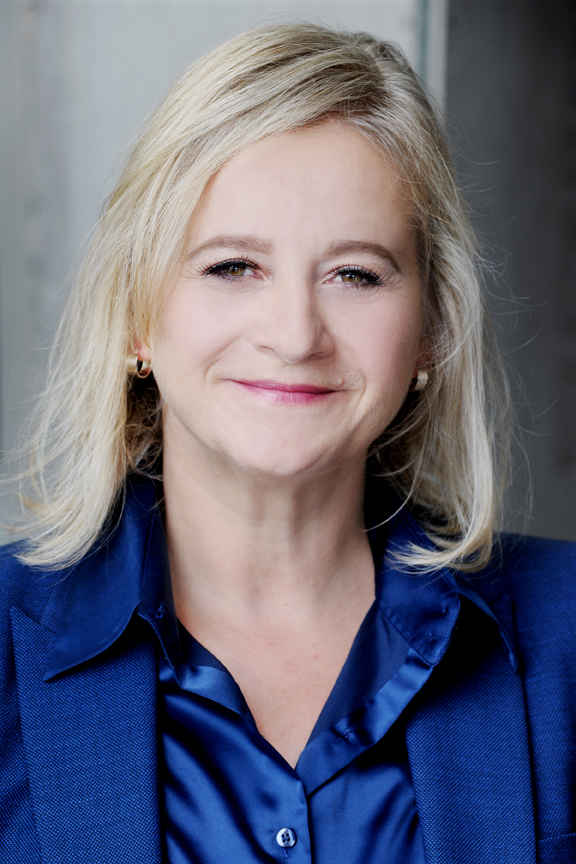
For more than three decades, Kathryn Podrebarac has been at the centre of Canada's most complex commercial disputes — first as a litigator of the first rank, and since 2017 as a mediator.
Following her call to the Ontario bar in 1994, Kathryn began her career on Bay Street at a top national firm, litigating civil and class actions before founding two leading litigation boutiques, both of which were consistently recognized by Lexpert as "repeatedly recommended" for corporate commercial litigation in Toronto. Over that time she has acted for some of Canada's largest public companies in litigation involving billions of dollars, for small family-run businesses in bet-the-company disputes, and for individuals from top corporate directors to those on social assistance.
She has litigated before every level of the courts in Ontario and the federal courts, appeared before the superior courts and courts of appeal in most Canadian provinces, and argued before the Supreme Court of Canada. In 2016, four of her cases were resolved in her clients' favour at the Supreme Court — in a single year.
Kathryn has been invited by the Law Society of Ontario to speak on professional ethics — a reflection of the regard in which she is held by the profession's regulator. Her excellence and contribution to the field of mediation were recognized with the Ontario Bar Association's Award of Excellence in Alternative Dispute Resolution in 2026.
She has served as a director of The Advocates' Society; on the executive of the Civil Litigation and Class Actions sections of the Ontario Bar Association; on the OBA's Civil Rules Review Task Force contributing on mediation issues; and as a founding director of the Canadian Branch of the Chartered Institute of Arbitrators. She was inducted into the Canadian Academy of Distinguished Neutrals in 2022.
Kathryn has chaired conferences and spoken at continuing legal education programs for The Advocates' Society, the Ontario Bar Association, the Law Society of Ontario, Osgoode Professional Development, and the ADR Institute of Canada. Her presentation at the ADR Institute of Canada's 2025 National Conference, "Why 'Good Cases' Fail to Settle," reflects her ongoing commitment to advancing the practice of mediation in Canada.
A full list of more than 75 speaking, teaching, and mentoring engagements is available here.
Kathryn's practice centres on complex and high-value commercial disputes drawn from all areas of corporate and commercial law. Her litigation background means she brings genuine expertise to the subject matter, not merely familiarity with process.
All mediation services are provided through Podrebarac Barristers Professional Corporation.
Every mediation follows a structured sequence designed to maximise the conditions for settlement.
Consult the availability calendar and complete the booking request. After a conflicts check is cleared, a mediation agreement is signed by all parties and the date is confirmed.
Kathryn convenes all counsel. Decision makers, settlement authority, and a brief exchange schedule — typically 10 days out — are confirmed. Decision analysis methodology is introduced.
Kathryn prepares her case PowerPoint. Confidential decision tree meetings are held with each side. Risk-adjusted value reports are provided to counsel. All included in the fee.
The session opens with Kathryn's PowerPoint to all parties. Caucus sessions follow. Even when parties begin far apart, she remains invested, exploring every path to resolution. The vast majority of cases settle.
If the matter does not resolve, Kathryn follows up within two weeks. Some cases settle at this stage. Even those that proceed to trial consistently report that the mediation clarified the issues. Many request copies of her chronology for trial preparation.
I'm immensely grateful for your work and dogged perseverance on this file.
Senior Litigation PartnerI really thought it could not be settled. You still have a perfect record for second mediations. Amazing. I also thought your presentation at the beginning was really excellent — it really made the parties feel heard.
Partner, Litigation BoutiqueNot many mediators go the extra mile like you did — both in terms of time but also in helping us bridge the gap on small drafting points.
Partner, Litigation BoutiqueIt was interesting for me to watch you work and to recognise how you do what you do — how you adapt to both sides to get to the end result. You worked with us perfectly and it sounded like the other side too.
Litigation Partner, Regional Law FirmThank you for your very thorough work on this. It is obvious that you put real thought and effort into it.
Senior Litigator, Sole PractitionerI'll never forget how you helped me and my client to settle a matter at mediation. I appreciated how thoughtful you were from the outset. You are excellent. I have said your name many times to colleagues.
Partner, Litigation BoutiqueKathryn's fees reflect the depth of preparation, the included decision tree analysis, and a practice built on nine years of results. They are posted here in full because transparency is part of how she works.
Cancellation. If a mediation is cancelled 10 days or less before the scheduled date, 50% of fees are payable jointly and severally by all parties and their counsel, unless agreed otherwise. This fee is waived if the mediation is rebooked and held within 3 months. A mediation may be rescheduled once only.
Liability for fees. Lawyers are jointly and severally liable with their clients for Kathryn's fees. All fees are subject to HST.
Scheduling. Due to other commitments, Kathryn cannot always extend a mediation past the allotted time. Please confirm the anticipated length with all parties prior to booking.
Full Day · Two Parties
Plus HST · Includes up to 6 hours of mediation time
Included in this rate
All mediations are conducted virtually via Zoom — a deliberate choice that serves the parties' interests, allowing busy executives located anywhere to get straight to the business of resolving the dispute without unnecessary travel time and costs. Settlement rates and participant satisfaction are fully consistent with in-person mediation.
To check availability and request a booking, consult the calendar and complete the booking request form. Kathryn will conduct a conflict check and be in touch shortly to confirm availability and next steps.
Telephone
Mediation Format
Virtual via Zoom · Available Canada-wide